
Statecraft Under Asymmetry: Lessons from the Oval Office
High-stakes diplomacy is not a moral forum
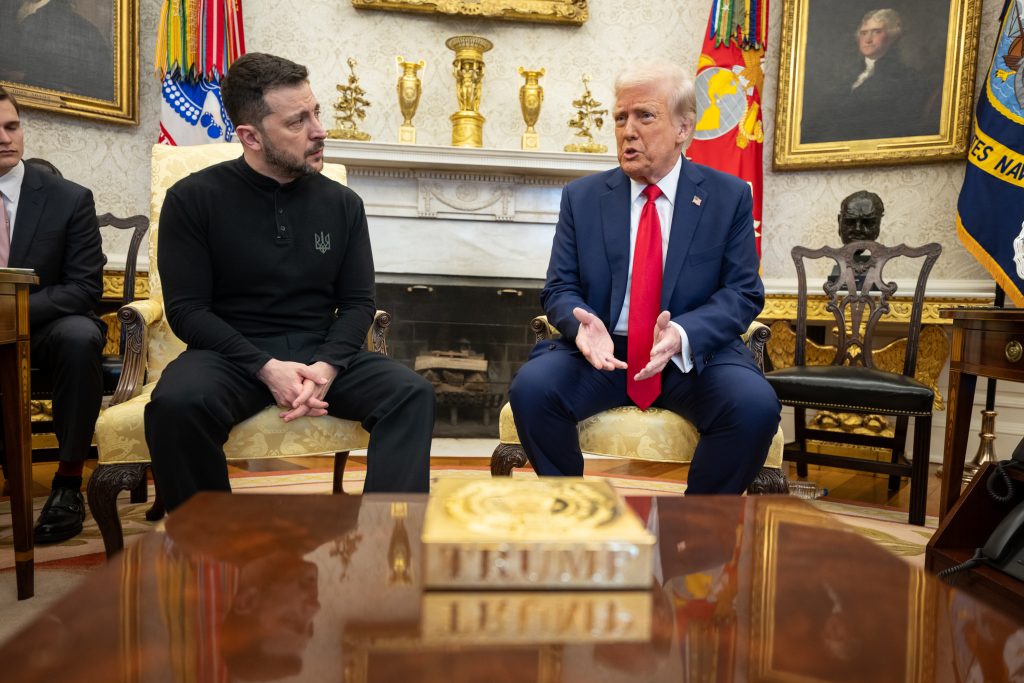
In recent weeks, a series of meetings in Washington between the United States and key European leaders produced broadly constructive outcomes. The notable exception was the encounter between President Donald Trump and President Volodymyr Zelensky.
The reaction to that meeting has been overwhelmingly emotional. Much of the commentary has focused on morality, tone, and perceived fairness.
This analysis does not.
Statecraft is not conducted in the language of moral entitlement. It operates in the language of power, leverage, and interest. In environments of extreme asymmetry, outcomes are shaped less by what is right than by what is strategically intelligible to the party holding decisive influence.
This is not cynicism. It is realism.
Negotiation begins with leverage, not sentiment
At the core of the Oval Office encounter lay a fundamental imbalance.
President Trump entered the meeting as the leader of the world’s dominant power, newly re-elected with a clear mandate and explicit intent to reframe American foreign policy. Ukraine, by contrast, arrived dependent on continued Western support, with limited ability to shape terms.
In such conditions, negotiation is not an exchange between equals. It is an exercise in managing asymmetry. History offers ample precedent.
Lend-Lease as strategic precedent
During the Second World War, the United States’ support of Britain through the Lend-Lease programme is often remembered as altruistic intervention. In practice, it was a calculated strategic decision, structured on terms favourable to American interests.
Britain accepted those terms because the alternative was worse. Repayment extended for decades, with the final instalment made in 2006.
The lesson is not that the arrangement was unjust. It is that support between states is rarely free of conditions, even among allies.
In this sense, contemporary proposals linking continued support for Ukraine to economic or strategic concessions are not anomalous. They are consistent with how power has historically been exercised.
Managing perception when power is unequal
Leaders operating under asymmetric conditions must recognise that negotiation shifts from persuasion to perception management.
Recent engagements illustrate this clearly.
France and the United Kingdom approached their discussions with the United States from positions of recognised power, institutional continuity, and historical depth. Both leaders emphasised alignment, framed shared interests, and avoided public confrontation. Preparation was evident. Nothing was left to improvisation.
Ukraine’s position was materially different.
Without leverage, success depended on restraint, optics, and framing, ensuring the stronger party never felt challenged, threatened, or morally cornered.
That threshold was crossed.
Once emotional escalation occurs in such settings, strategic optionality collapses.
When leverage is absent, discipline matters more
In negotiations where one side holds decisive power, several principles become critical:
Restraint over rebuttal
Responding emotionally to provocation may satisfy domestic audiences, but it undermines strategic objectives. In high-stakes diplomacy, composure preserves room to manoeuvre.
Symbolism over substance
In asymmetric settings, optics carry disproportionate weight. Signals of transition, stability, or alignment often matter more than policy detail. Appearances are not superficial; they shape interpretation.
Interest-based framing
Arguments grounded in moral obligation are ineffective when the counterpart prioritises transactional logic. Framing must reflect the other party’s incentives, not one’s own needs.
Indirect influence
When direct persuasion is unlikely to succeed, shaping the broader environment, through allies, institutions, and intermediaries, becomes the more effective route.
These are not ethical judgements. They are operating realities.
Realpolitik is not cruelty; it is constraint
Realpolitik is often caricatured as heartless. In reality, it is an acknowledgment of limits.
Leaders do not always negotiate to achieve justice. They negotiate to avoid worse outcomes, preserve optionality, and buy time. Emotional satisfaction is rarely part of the calculus.
Where leverage is absent, discipline replaces assertion. Where dependence exists, signalling replaces demand.
Failure to recognise this does not produce moral clarity. It produces strategic failure.
Closing perspective
Statecraft is not performed for audiences. It is conducted under constraint.
In moments of acute asymmetry, success depends on preparation, positioning, and disciplined restraint. Those who mistake moral clarity for leverage often discover, too late, that the room has already decided.
The lesson extends beyond geopolitics. In business, governance, and negotiation alike, power asymmetry demands strategy, not sentiment.
That is not idealism abandoned.
It is realism applied.
REQUEST A PRIVATE CONVERSATION
If you’re a mid-market business (£3M–£100M) or government body in need of strategic leadership, growth and governance support across international expansion, bilateral trade & FDI, or Digital, AI & cyber governance, please request a private conversation.
Book a Free Discovery Meeting